



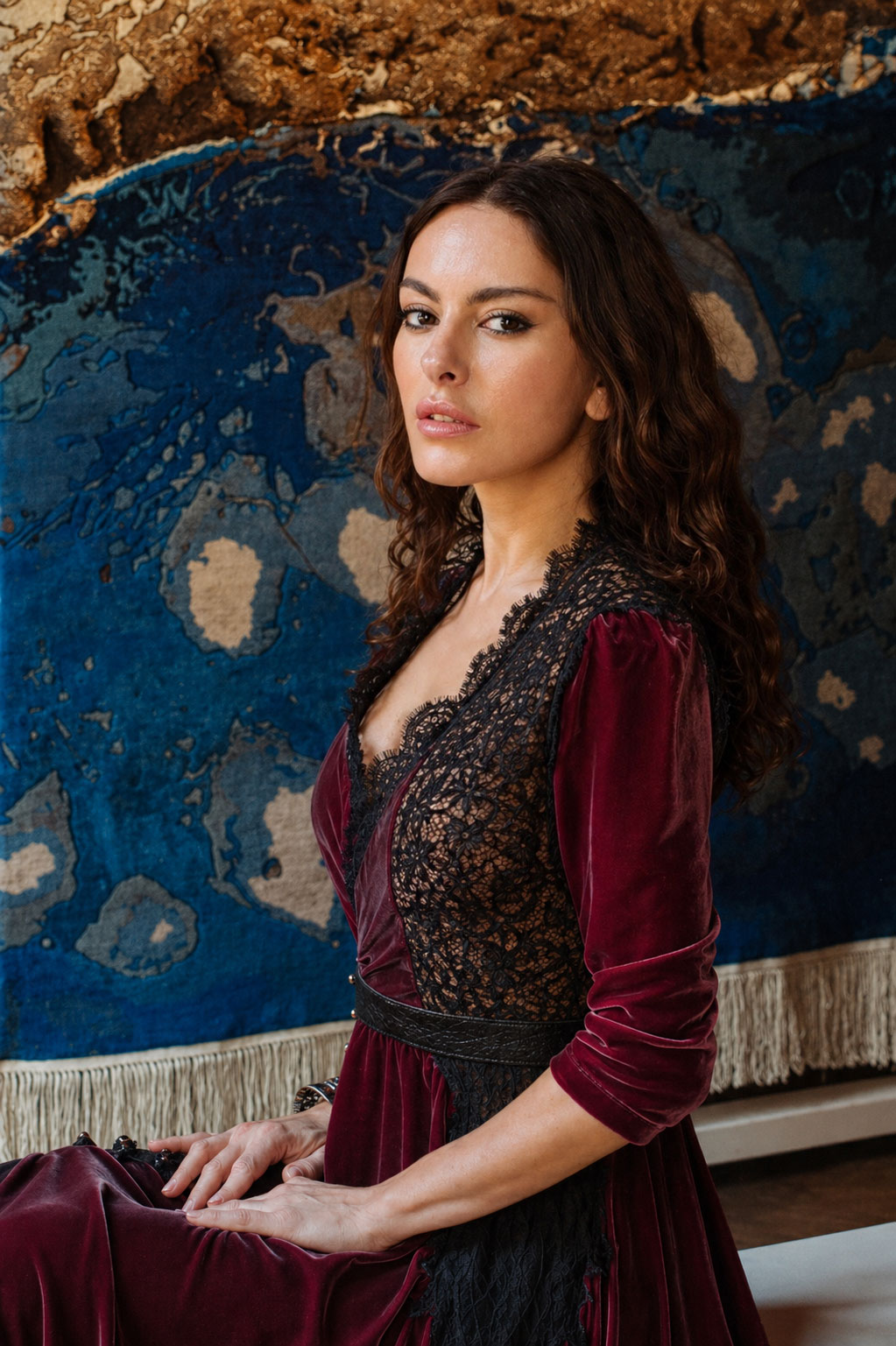
ELYSIUM
Collaboration of Aida Mahmudova and Azerkhalcha | Azerkhalcha Carpet Gallery | Boyuk Qala, 15
Aida Mahmudova’s carpet series offers a considered reworking of tradition, where the visual language of Azerbaijani textile practice is both preserved and reinterpreted. Emerging from her painting series Elysium, the works are developed through the selection and transformation of specific fragments into woven form, shifting from gesture and surface into structure and material presence. Carpets from the Elysium Series (2024–2025) comprises three handwoven carpets (150 × 200 cm each), produced in collaboration with female artisans in workshops across Nardaran, Shamkir, and Guba, Azerbaijan. Through layering, shifts in texture, and material intervention, the carpets move beyond their conventional reading, becoming spatial and tactile works that hold a sense of depth and physicality. Rather than functioning as direct translations, they evolve into an inde-pendent body of work, where the language of painting is rearticulated through textile. The compositions, rooted in a process of fragmentation, al-low individual elements to be isolated and expanded. These details unfold within the woven surface with a degree of autonomy, creating new relationships between form, scale, and material. In this way, Mahmudova engages with the historical language of carpet-making while placing it within a contemporary context.
About the Artist: Aida Mahmudova is an artist and patron of the arts in Azerbaijan, and the founder of YARAT Contemporary Art Space in Baku and CHELEBI, a brand focused on collectible design and décor. A graduate of Central Saint Martins College of Art and Design in London, her work explores memory, place, and belonging through painting, sculpture, and installation, and has been exhibited internationally, including in Baku, Rome, Vienna, New York, London, and at the 56th Venice Biennale.
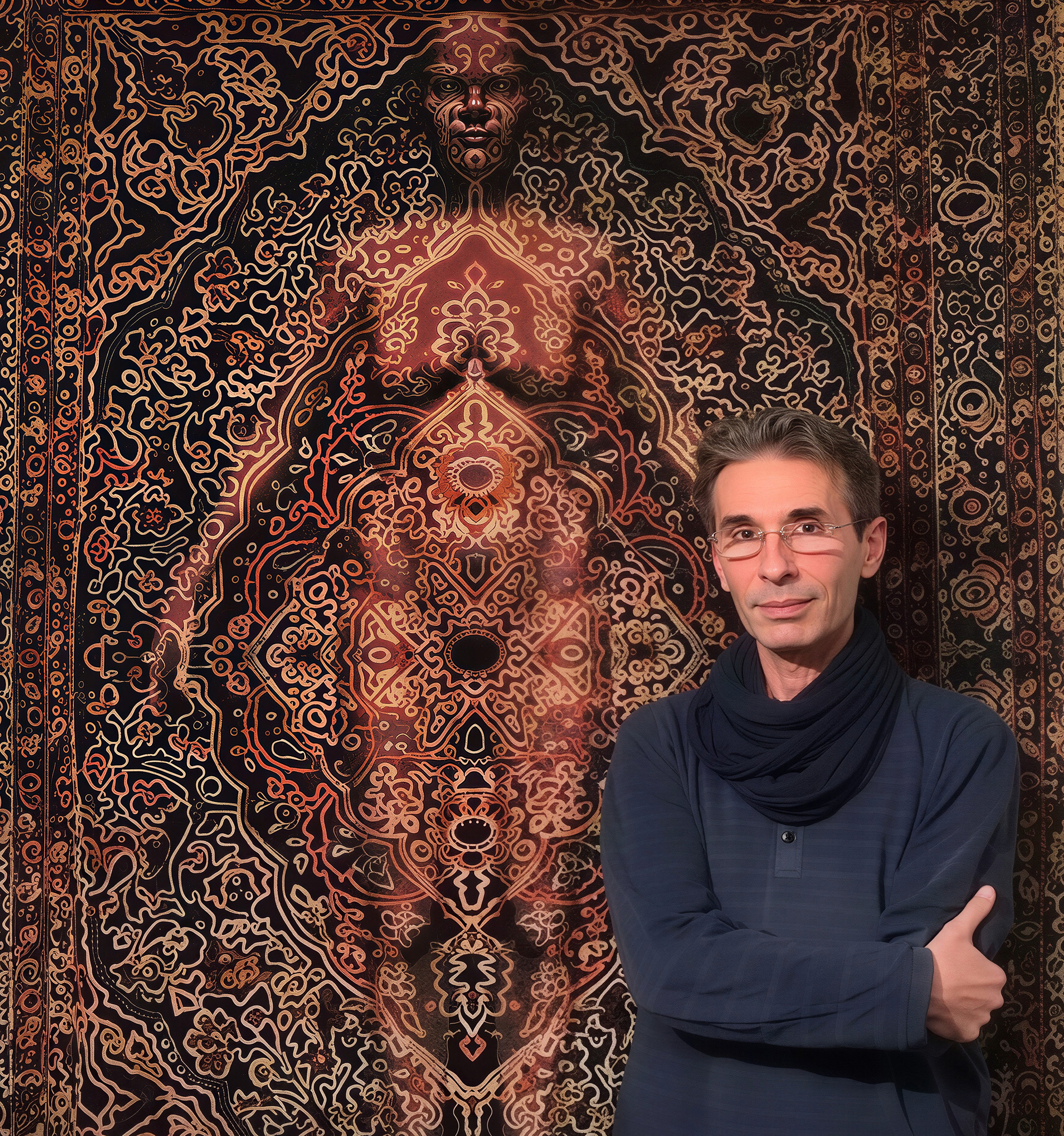
INTERTWINED
Exhibition by Xhevahir Kolgjini | Zaman Gallery
In Intertwined Polarities, Xhevahir Kolgjini explores spiritual transformation, psychological tension, and the fragile balance between what persists and what changes. Built through the language of hand-knotted weaving, the works translate lived experience into a woven structure of lines, knots, grids, and pixels, reflecting the artist's long engagement with cultural crossings and clashing civilizations. The exhibition presents textile as both image and thought: a space where sensory, mental, and cultural insights are interlaced into a powerful meditation on coexistence and self-expression.
About the Artist: Xhevahir Kolgjini is an Albanian-American artist trained in painting and fiber arts at the Academy of Arts in Tirana, where he later completed postgraduate studies in art criticism. He has been a lecturer in visual arts at RIT Kosovo since 2004, and his works have been shown internationally in Albania, London, New York, Minneapolis, Texas, and beyond, with works from the Intertwined Polarities series exhibited in recent years in Tirana and New York.
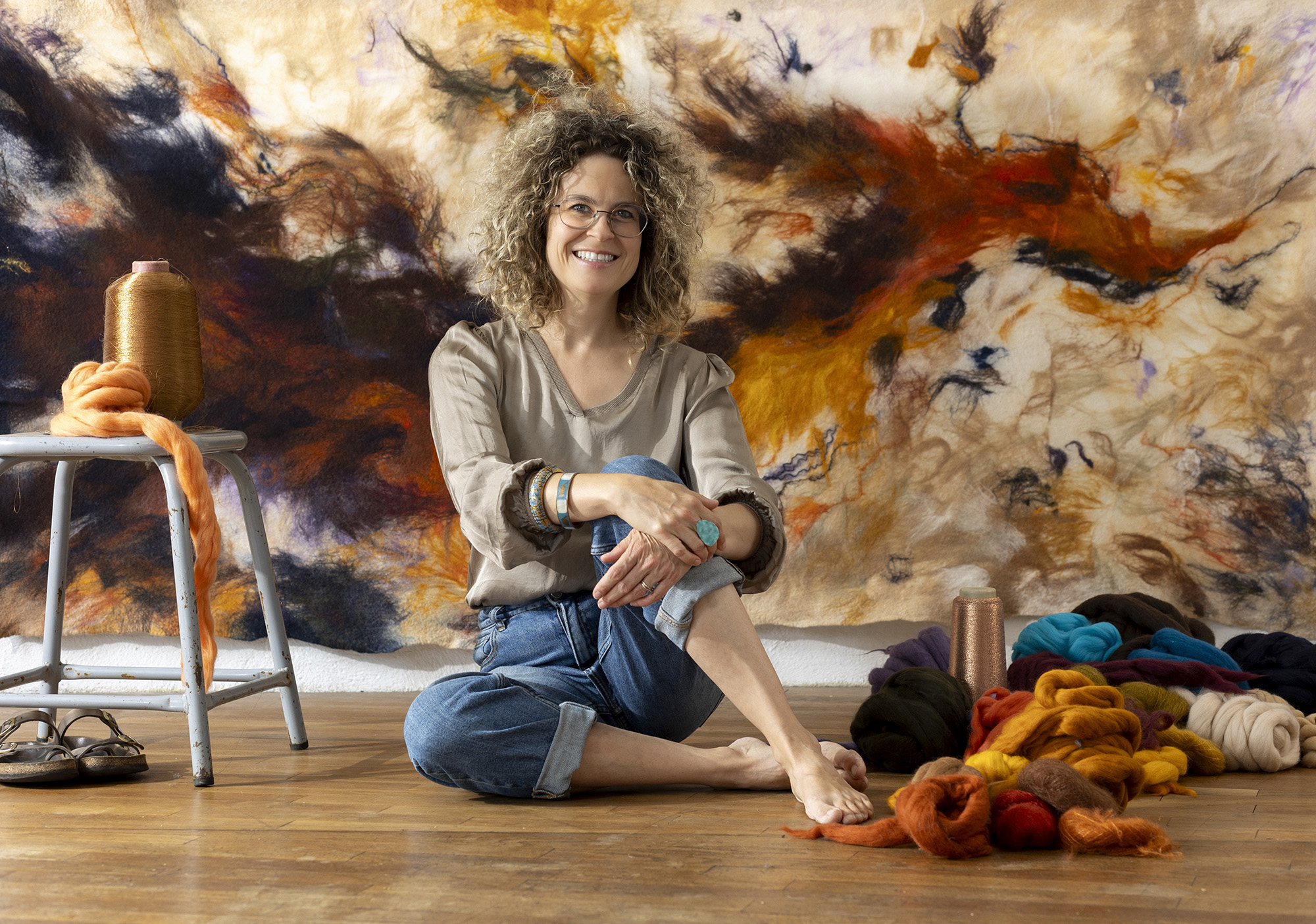
SOULS IN MOTION
Exhibition by Laurine Malengreau | Baku Photography House
Souls in Motion invites viewers into an emotional abstract world shaped by movement, breath, and the energies that pass through body and matter. Working in the rare Nuno Silk technique, Laurine Malengreau creates textile surfaces that feel alive, evoking deep waters, earth, fire, and air in compositions that seem to inhale and exhale before the eye. Her works move inward, toward what is unspoken and unseen, uncovering joy, vulnerability, and transformation through material language.
About the Artist: Laurine Malengreau is a Belgian textile artist based in Aubusson, France, a historic centre of tapestry and contemporary textile art. After studies in art history and experience in cultural management, she trained in Nuno Silk in Madrid and has since developed an internationally recognized practice, receiving major distinctions including the Homo Faber Fellowship, awards from Ateliers d'Art de France and the Gobelins Gallery, and becoming the first artist to enter the permanent collection of the Rothko Museum in Latvia.
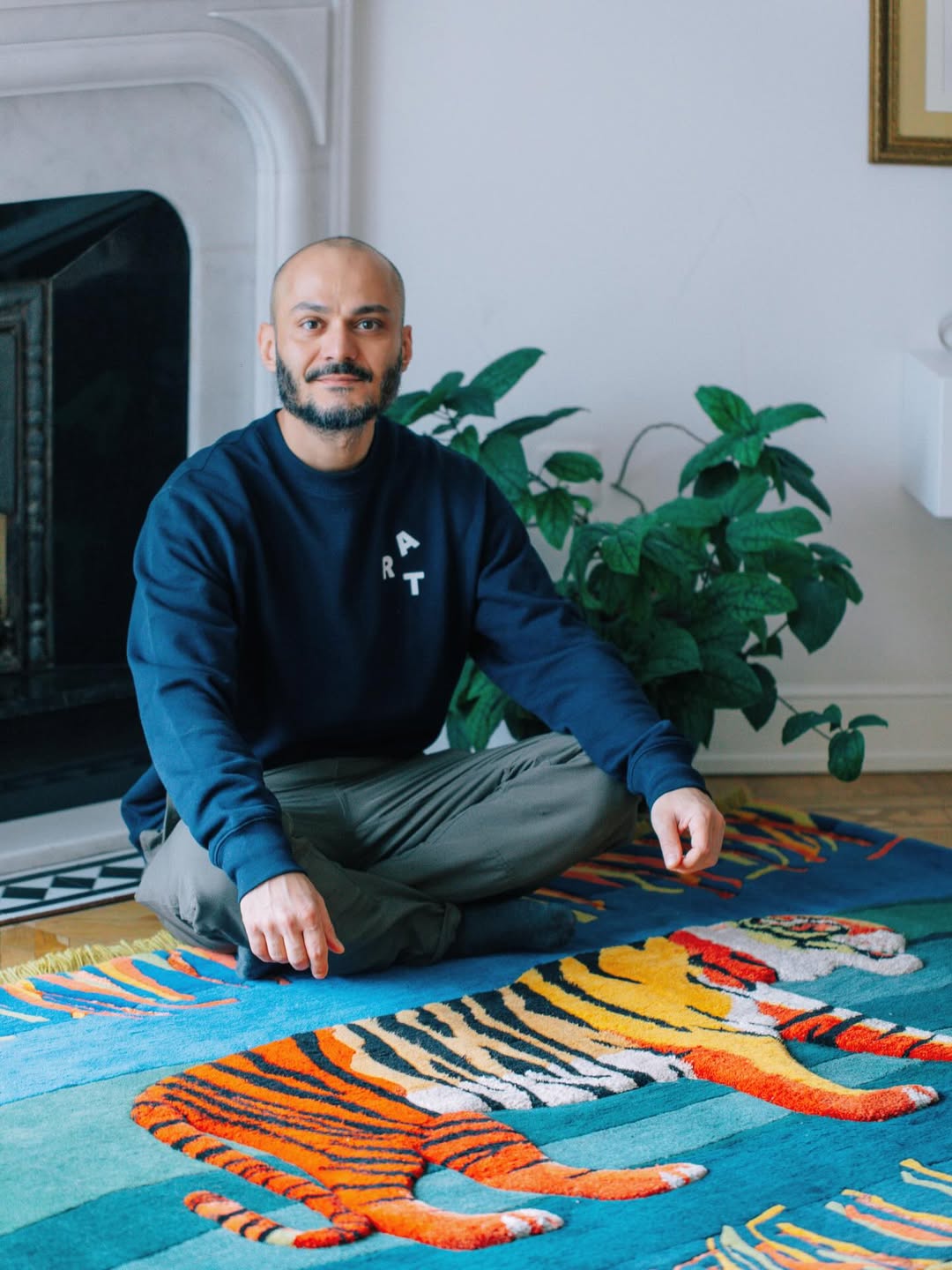
FAIRY TALES WOVEN INTO THREADS — GARABAGH CARPETS
Collaboration of Farid Rasulov and Azerkhalcha | QGallery
“Fairy Tales Woven into Threads: Garabagh Carpets” is an exclusive collection created through the collaboration between Azerkhalcha OJSC and artist Farid Rasulov. The project offers a contemporary perspective on the Garabagh carpet-weaving tradition, rethinking and visually transforming this rich heritage within a modern artistic context. Crafted from a blend of wool and silk using a 3D technique, the works reinterpret traditional ornamentation as independent visual narratives, generating a new aesthetic language through color, form, and rhythm. The exhibition presents not only carpets but also a selection of the artist’s paintings that are conceptually connected to the collection. This approach allows viewers to trace the development of the core idea across different artistic mediums, offering a more comprehensive understanding of the project’s visual language.
About the Artist: Farid Rasulov’s artistic practice is shaped at the intersection of intuition and observation, where the ordinary transforms into a field of perceptual inquiry. Trained as a medical doctor at Azerbaijan State Medical University, his transition into the visual arts marked a sharp and unexpected departure from conventional career trajectories. Within a short period, he established himself as a distinctive voice in contemporary art, representing Azerbaijan at the 53rd and 55th Venice Biennale in 2009 and 2013 with gaining international recognition.
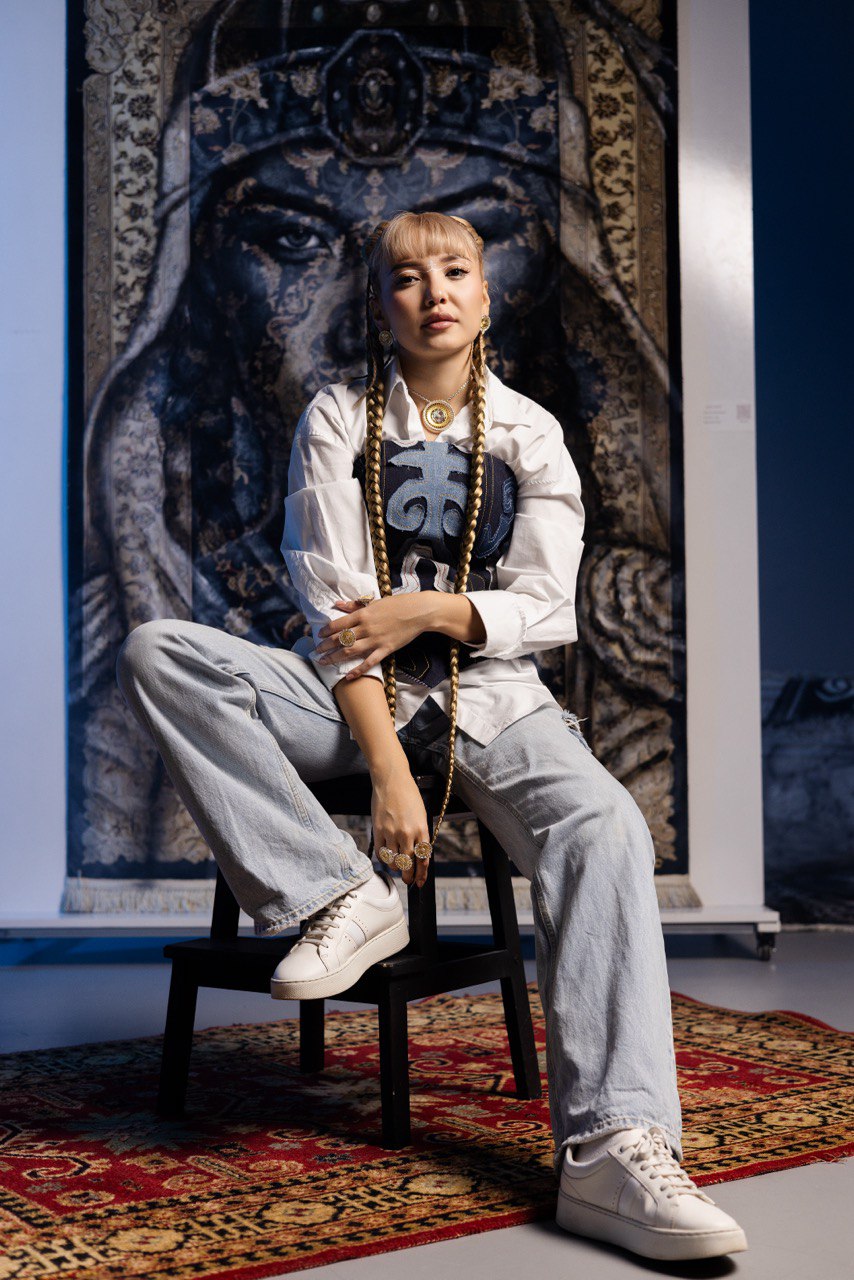
WOMEN OF THE TURKIC STEPPE
Exhibition by Assol | Azerkhalcha New Carpet Gallery | Boyuk Qala 44, Baku Khans' Palace Complex
KilemArt Series: Women of the Turkic Steppe In 2023, Assol created a series of 14 portraits inspired by women from the history of the Turkic степpe. Among them are Gaukhar Batyr and Barys Kyz—powerful female figures depicted on carpets. These works merge traditional ornament with contemporary expression, embodying strength, wisdom, and beauty beyond the limits of form.
About the Artist: Assel Sabyrzhankyzy (Assol) is a professional artist and creative content creator from Kazakhstan. In 2026, she was named among the Top 50 global creators by TikTok. She combines nomadic culture with contemporary graffiti techniques, creating her unique style called KilemArt—transforming traditional carpets into artistic canvases. Known as @assolyaa, she has built a large international audience across social media. Her works have been exhibited in Astana, Berlin, and Paris, and her videos featuring gifts of her artworks to global celebrities have reached millions of views.
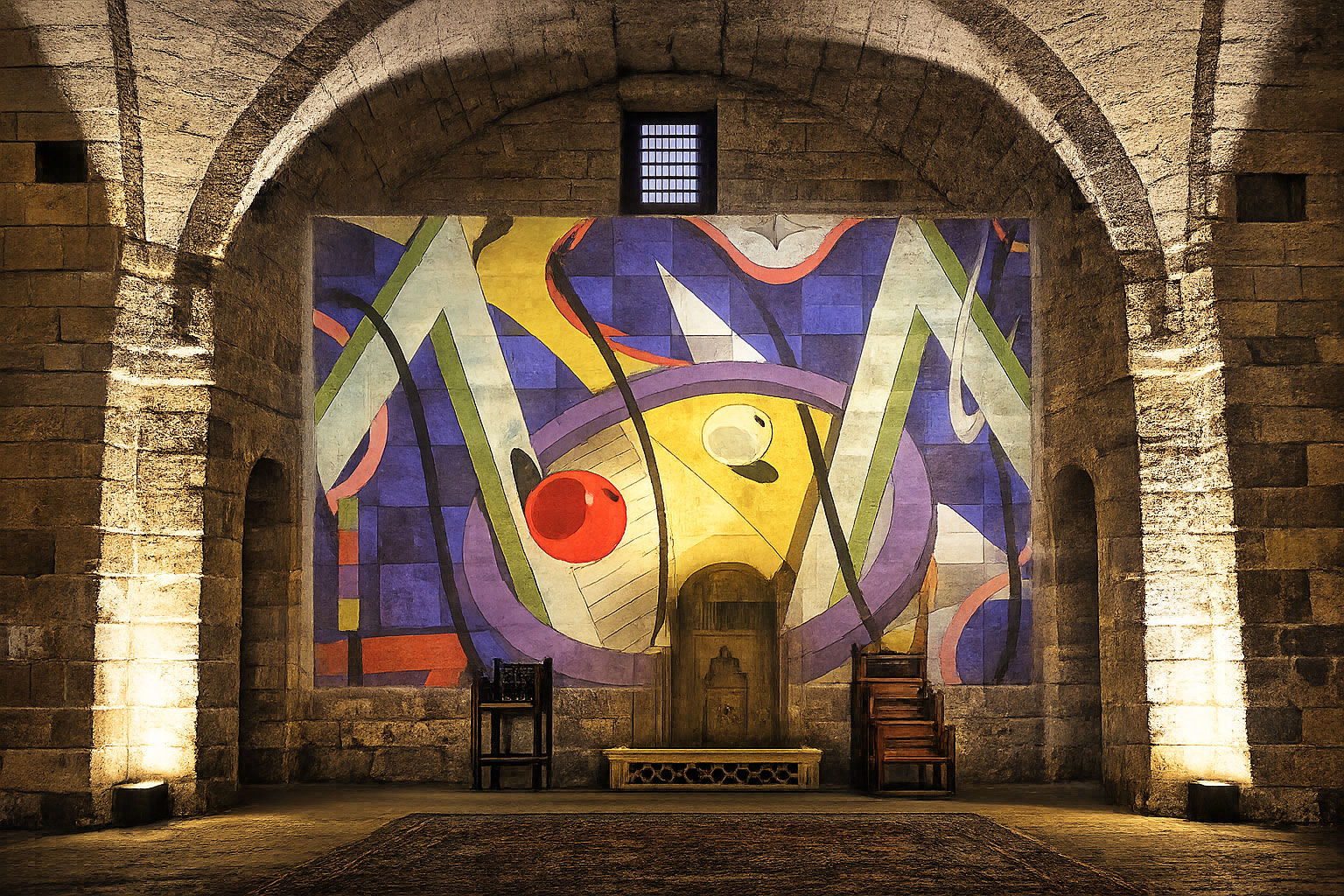
ATESH HUB: ART AND EDUCATIONAL PROGRAMME
The Atesh Hub platform, in partnership with Icherisheher, will present a public artistic and educational program as part of the International Carpet Festival.
The Atesh Hub platform, in partnership with Icherisheher, will present a public artistic and educational program as part of the International Carpet Festival. In the contemporary world, the carpet retains functions close to religious or sacred ones, especially in cultures where it serves not merely as an interior object, but as a carrier of ethnocultural identity, history, and spiritual traditions. To expand this theme for a wider audience, the program will be presented within the museum space of the Palace Mosque of the Shirvanshahs’ Palace Complex. It will consist of lecture-presentations by Atesh Hub curators Mansura Mammadaliyeva and Bakhtiyar Ali, accompanied by a video installation featuring projections of works by Atesh Hub artists - Ramil Mammadli, Ellada Aghayeva, Alina Yusupova, Timur Zaripov, and Huseyn Jalil. The total duration of the program is four hours, divided into two parts of two hours each. Attendance at the lecture-presentations is available by prior registration. The language of the lectures is Azerbaijani.
About the program: The lecture-presentation by curator and art historian Mansura Mammadaliyeva, titled “From Ornament to Algorithm: The Evolution of the Azerbaijani Carpet from Tradition to Contemporary Practice,” will address the transformation of the Azerbaijani carpet from cultural consciousness to digital art. The lecture-presentation by curator and art theorist B. Ali, titled “From Pattern to Alphabet: A Journey of Visual Language,” explores the evolution of visual language from ornament to semiotic system. Mentor of Atesh Hub - Honored Artist of Azerbaijan, curator Sabina Shikhlinskaya. Coordinator - Agnessa Tariverdiyeva.
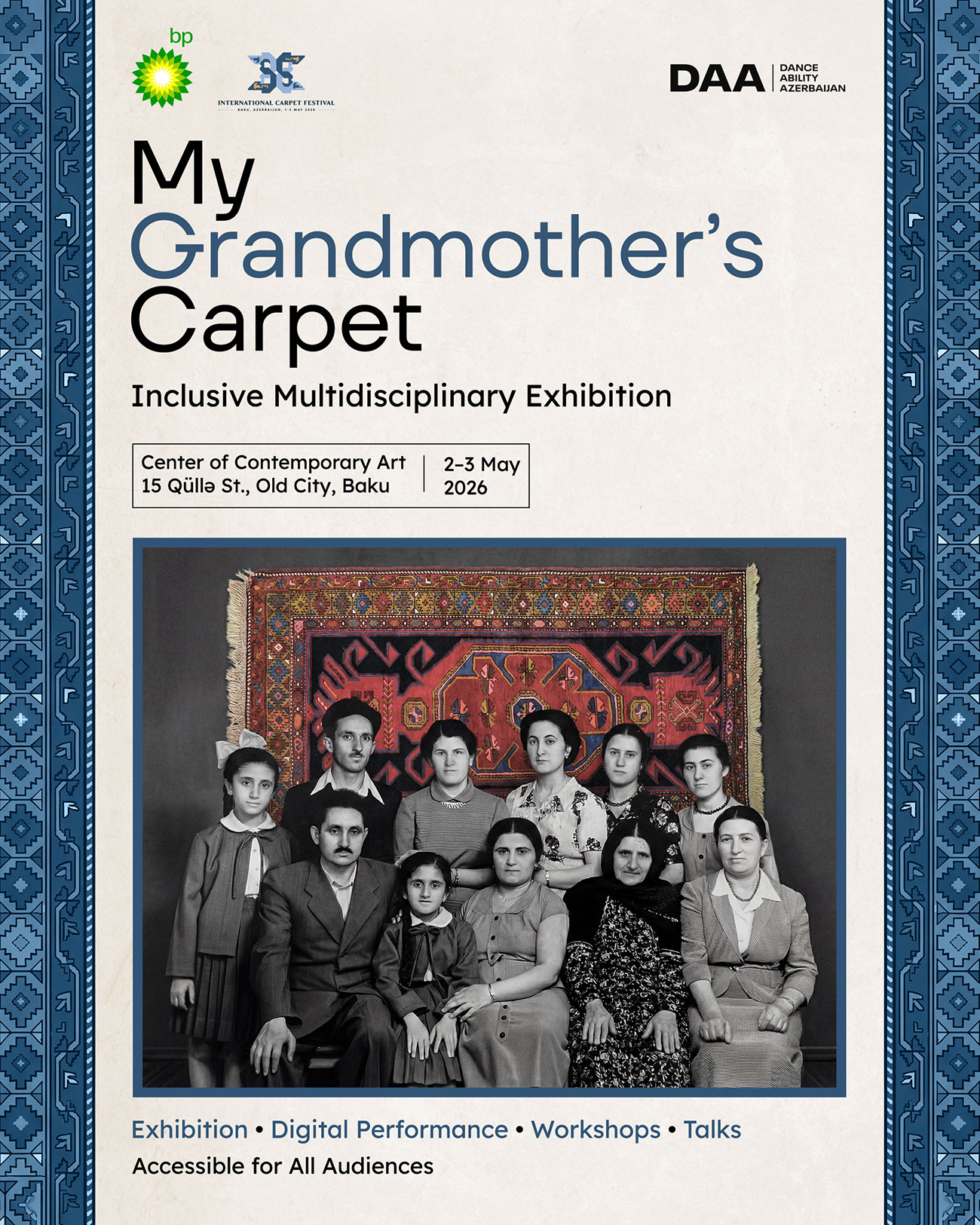
MY GRANDMOTHER`S CARPET
DanceAbility Azerbaijan presents an Inclusive Multidisciplinary Exhibition | Contemporary Art Center | 15 Gulle Street, Icherisheher, Baku | 2–3 May 2026
DanceAbility Azerbaijan presents Inclusive Multidisciplinary Exhibition | Center of Contemporary Art | 15 Qüllə St., Old City, Baku | 2-3 May, 2026 Inspired by personal stories and the experience of Azerkhalcha OJSC weavers, this event presents the carpet not just as a traditional object, but as a living, shared experience. The program brings together contemporary digital performance, storytelling, workshop, and panel discussions, with all activities created and delivered by people with and without disabilities working together. The event will be held in Azerbaijani and English and follows human-centered design principles, with accessibility integrated throughout, including sign language interpretation, audio description, and formats adapted to different needs. DanceAbility Azerbaijan invites visitors to attend, discover carpet culture up close, and bring memories to life. As this tradition lives on, new stories emerge, are passed down through generations, and continue to be shared. The main sponsor of “My Grandmother’s Carpet” is bp. The International Carpet Festival is organized by Azerkhalcha OJSC and the Icherisheher State Historical-Architectural Reserve Administration, with the support of the Ministry of Economy and AZPROMO - the Export and Investment Promotion Agency of the Republic of Azerbaijan.
About DanceAbility Azerbaijan: Founded in 2017 by Nigar Sultanova, DanceAbility Azerbaijan brings together people with and without disabilities, contributing to the development of inclusive communities. Through activities based on the DanceAbility®️ method, it combines art, movement, and education, promotes equal participation, and supports the growth of a more inclusive culture.